INTRODUCTION
It happens on almost every first safari. The vehicle stops. The guide points into the grass. You raise your binoculars and see a spotted cat moving through the golden savannah. And then comes the question nobody wants to ask out loud.
Is that a cheetah or a leopard?
Do not feel embarrassed. Even experienced safari goers mix them up. Both are spotted. Both are big cats. Both live in Kenya. But once you know what to look for, you will never confuse them again. This guide covers everything – appearance, behaviour, hunting style, speed, habitat and exactly where to find each one in Kenya.
THE QUICK ANSWER
If you need one rule to take into the bush, here it is.
Look for the tear marks.
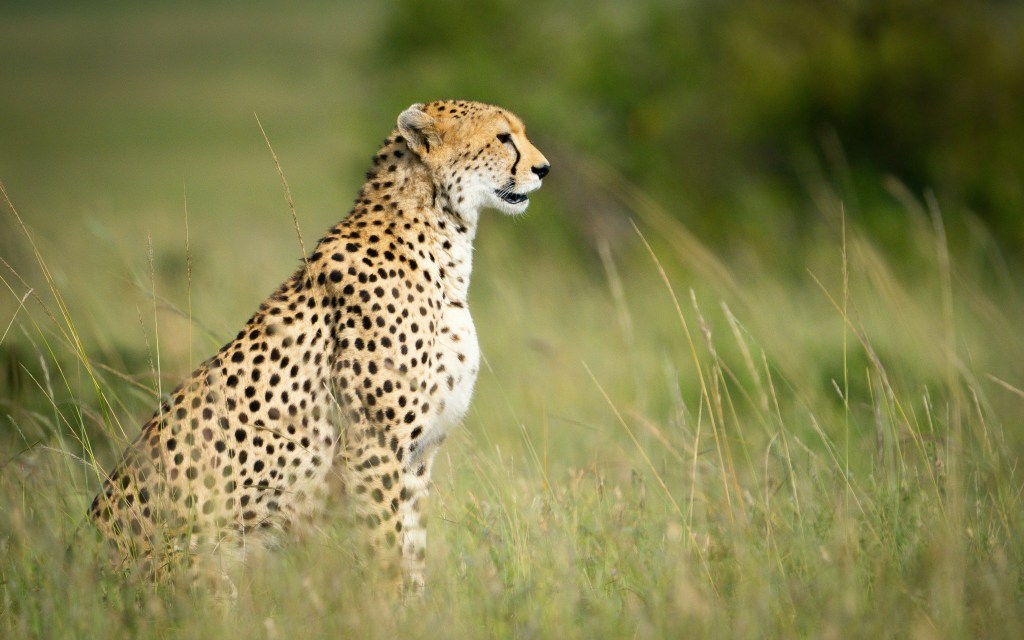
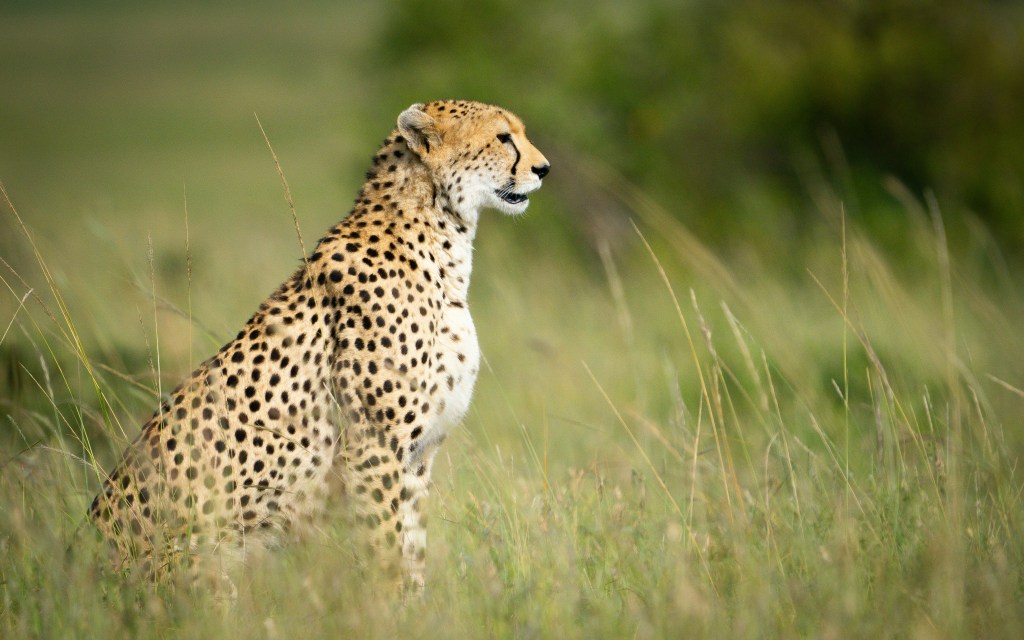
The cheetah has two distinctive black lines running from the inner corner of each eye down to the sides of the mouth. The leopard has none. That single detail is enough to tell them apart at a distance, even from a moving vehicle.
Everything else follows from there.
APPEARANCE: HOW TO TELL THEM APART VISUALLY
The Face
The cheetah’s tear marks are its most distinctive feature. These solid black lines serve a functional purpose, reducing sun glare during daytime hunts, much like the black lines athletes paint under their eyes. The leopard’s face is clean, with no such markings.
The cheetah also has a smaller, more rounded head relative to its body size. The leopard has a large, broad head with a powerful jaw built for gripping and carrying heavy prey.
The Coat
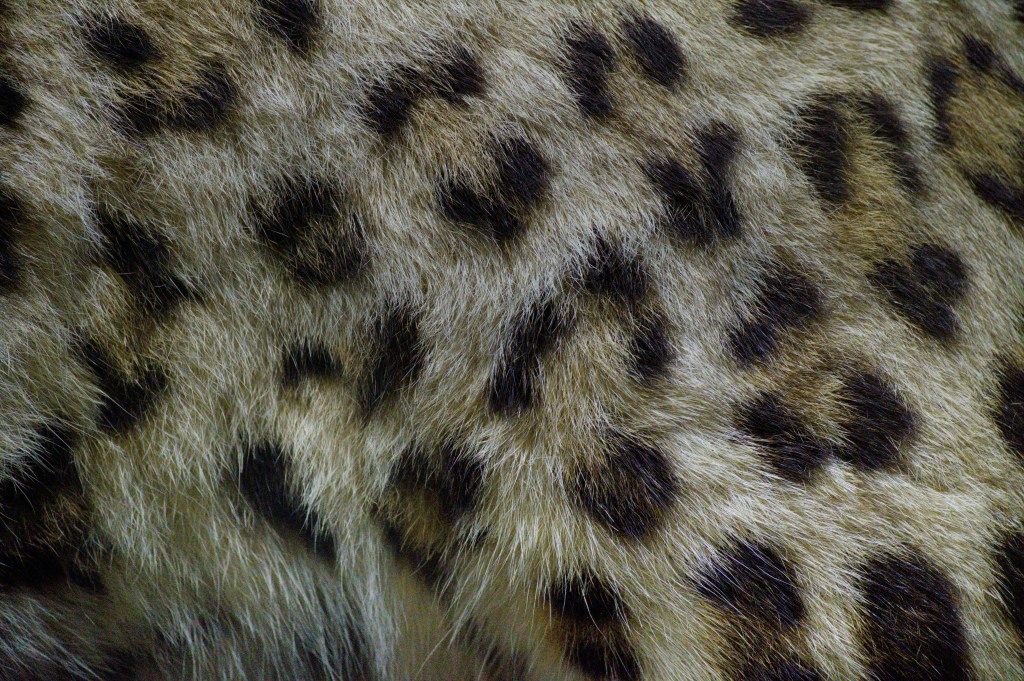
Cheetah spots are simple solid black dots evenly distributed across a tawny yellow coat.
Leopard spots are rosettes. Small clusters of spots arranged in a ring with a lighter or golden centre, like a flower pattern across the coat. Up close the difference is unmistakable. On a moving animal from a distance, the rosettes can look like solid spots, which is why the tear marks remain the most reliable identifier.
The Build
This is where the two animals could not be more different.
The cheetah is built for pure speed. It is lean, lightweight and aerodynamically designed. Long slender legs. A deep narrow chest for oxygen intake. A flexible spine that compresses and extends like a spring at full sprint, adding distance to every stride. A long tail that acts as a rudder for steering at high speed. The cheetah looks like it was engineered in a wind tunnel.
The leopard is built for power. It is heavier and more muscular with thick powerful shoulders, a broad chest and a stocky neck. It carries its weight low and forward, giving it the strength to climb trees and haul prey heavier than itself up a vertical trunk. Where the cheetah looks like a sprinter, the leopard looks like a weightlifter.
Size
Adult cheetahs weigh between 35 and 65 kilograms. Adult leopards weigh between 28 and 90 kilograms, with males significantly larger than females. Despite the overlapping weight range, a leopard almost always looks more substantial and powerful in the field.
SPEED AND HUNTING STYLE
The Cheetah
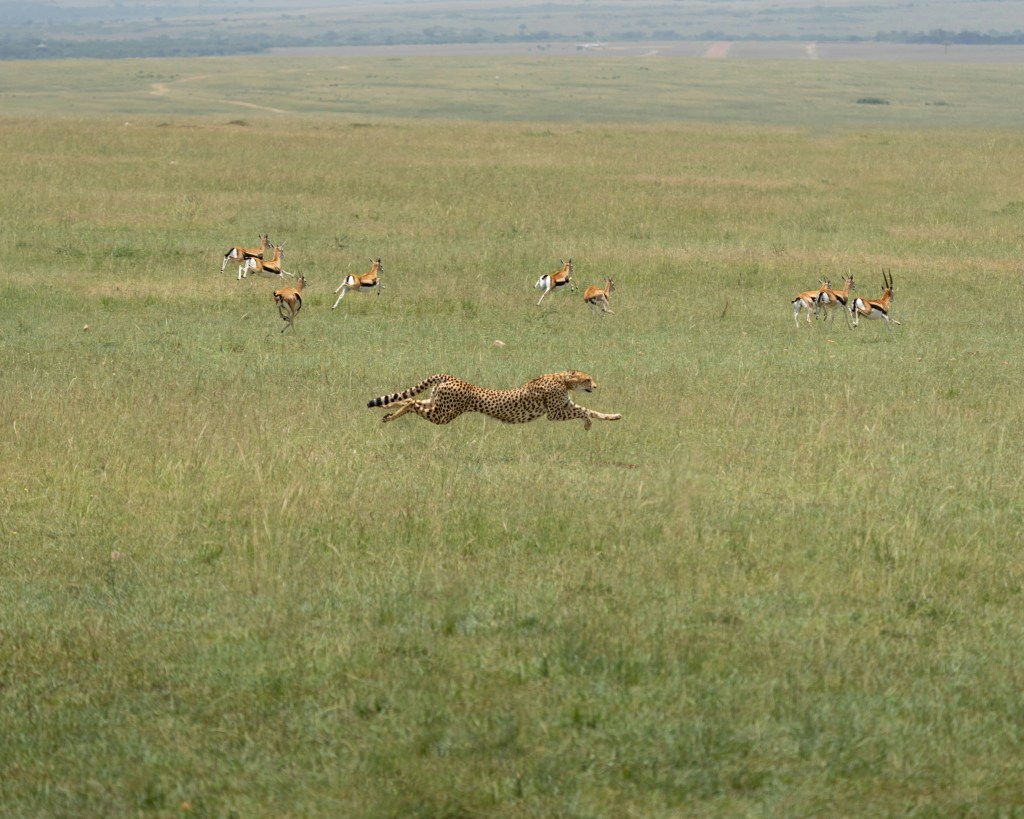
The cheetah is the fastest land animal on earth. Full stop.
It can accelerate from 0 to 100 kilometres per hour in approximately three seconds and reach a top speed of around 120 kilometres per hour in short bursts. These sprints rarely last more than 20 to 30 seconds. The cheetah’s body generates enormous heat at full speed and it must rest and cool down after every chase, sometimes for up to 30 minutes.
The cheetah hunts in daylight, typically in the early morning or late afternoon. It uses its exceptional eyesight to spot prey from a distance, then stalks close before launching a high speed chase. It trips its prey with a dewclaw and suffocates it with a bite to the throat.
Because the cheetah is not built for confrontation it often loses its kill to lions, leopards, hyenas and even large birds. Speed is its only real weapon. Once the prey is caught, the cheetah is vulnerable.
The Leopard
The leopard is a completely different kind of hunter.
Where the cheetah uses speed, the leopard uses stealth. It is a patient, methodical predator that hunts mostly at night, using darkness and cover to get close to prey before striking. It does not chase over long distances. It closes the gap silently and kills with a single precise bite to the back of the skull or throat.
The leopard’s strength is extraordinary. It routinely hauls prey twice its own body weight up into a tree, sometimes six metres or more off the ground. This behaviour protects the kill from scavengers like lions and hyenas that cannot climb. A kill hauled into a tree can last a leopard several days.
Unlike the cheetah, the leopard rarely loses a kill. It is strong enough to defend what it catches and smart enough to put it somewhere others cannot reach.
BEHAVIOUR AND PERSONALITY
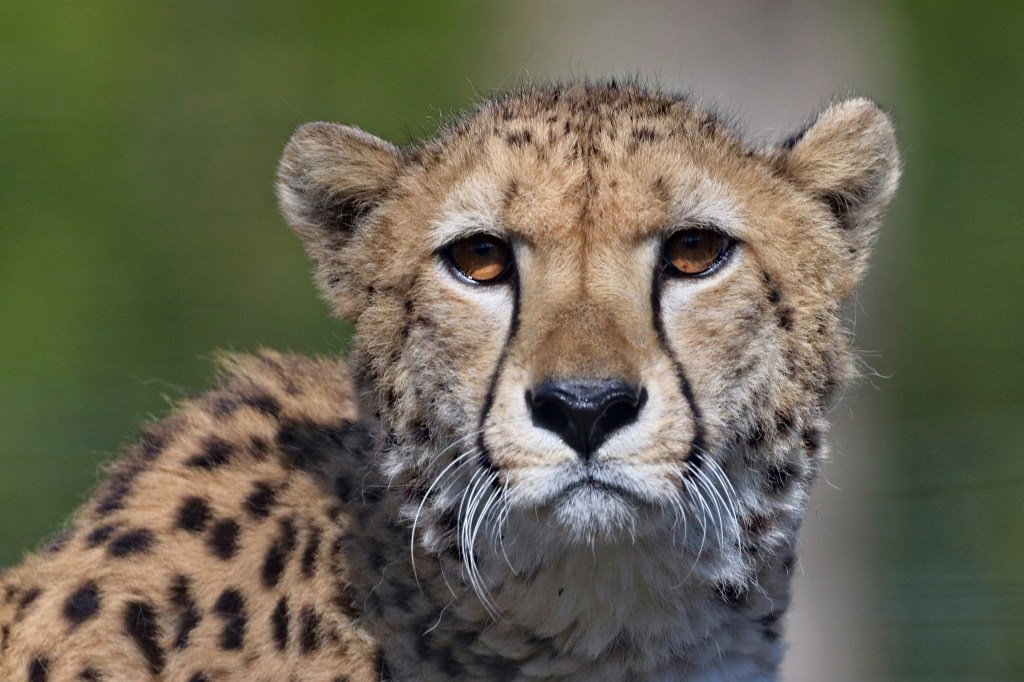
Cheetah
Cheetahs are the most social of the big cats after lions. Male cheetahs often live in small coalitions, usually brothers from the same litter. Female cheetahs are largely solitary except when raising cubs.
Cheetahs are active during the day and relatively easy to observe on open plains. They tend to use raised ground like termite mounds or fallen logs as lookout points to scan for prey. They are also the least aggressive of Kenya’s big cats toward humans and safari vehicles, often walking calmly past game drive vehicles with apparent indifference.
Leopard
The leopard is the ultimate loner. Almost entirely solitary, secretive and largely nocturnal. It goes to extraordinary lengths to avoid being seen, which is why it is considered the hardest of the Big Five to spot despite being relatively common across its range.
During the day leopards rest in trees, dense bush or rocky outcrops. They are most active between dusk and dawn. When a leopard is spotted in daylight it is usually because an experienced guide knows exactly which tree to look in.
The leopard is also the most adaptable big cat on earth. It survives in forests, mountains, semi-arid scrub, open savannah and even on the outskirts of cities. No other big cat has a range as wide or as varied.
WHERE TO FIND THEM IN KENYA
Cheetah
Cheetahs need open space to hunt. They are almost exclusively found in open grassland and savannah where they can use their speed effectively.
The best places to see cheetahs in Kenya are the Maasai Mara, particularly the open plains of the Mara Triangle, and Amboseli National Park. The Mara is home to some of Africa’s most studied cheetah populations and sightings are relatively reliable, especially during the dry season when grass is short and visibility is good.
Ol Pejeta Conservancy in Laikipia also has a strong cheetah population in a more intimate setting than the Mara.
Leopard
Leopards are found across a much wider range in Kenya but are harder to see because of their nocturnal and secretive nature.
The Maasai Mara has a healthy leopard population. The area around the Mara River and the fig tree forest near Governors Camp are particularly productive for leopard sightings. Laikipia Plateau, Samburu National Reserve and the forests around Mount Kenya also hold significant leopard populations.
The best time to spot a leopard is very early morning, just after sunrise, when they may still be moving or feeding in a tree before settling in for the day. A good guide who knows the territory will know which trees to check.
CONSERVATION STATUS
Cheetah
The cheetah is classified as Vulnerable on the IUCN Red List. There are estimated to be fewer than 7,000 cheetahs remaining in the wild globally. In Kenya cheetah populations face pressure from habitat loss, human-wildlife conflict and the illegal pet trade. Cheetah cubs are captured and sold as exotic pets across the Middle East, devastating wild populations.
Leopard
The leopard is classified as Vulnerable globally but individual subspecies face much more serious threats. In Kenya leopard populations are relatively stable compared to much of Africa but habitat loss and retaliatory killing by farmers protecting livestock remain significant concerns.
QUICK REFERENCE GUIDE
Tear marks: Cheetah yes, Leopard no
Spots: Cheetah solid dots, Leopard rosettes
Build: Cheetah lean and light, Leopard heavy and muscular
Hunting time: Cheetah daytime, Leopard nighttime
Hunting method: Cheetah speed chase, Leopard stealth ambush
Top speed: Cheetah 120km/h, Leopard 60km/h
Tree climbing: Cheetah rarely, Leopard frequently
Social: Cheetah sometimes in coalitions, Leopard solitary
Best Kenya location: Cheetah Maasai Mara and Amboseli, Leopard Maasai Mara and Laikipia
CONCLUSION
The cheetah and the leopard are both extraordinary animals. Both deserve your attention and your respect on safari. But they are fundamentally different creatures living fundamentally different lives.
The cheetah is speed, daylight and open grass. The leopard is power, darkness and secrets.
Kenya has both. If you are lucky and patient enough, you will see both on the same trip.
Start with the tear marks. Everything else follows.
Follow Apex African Safaris on Instagram, TikTok and Threads at safari2apex for daily Kenya wildlife, culture and safari content.

