Category: safari Blogs

  • Kenya’s Ground Birds: Why Most Safari Guests Drive Straight Past the Best Sightings

    Kenya’s Ground Birds: Why Most Safari Guests Drive Straight Past the Best Sightings

    Every year, thousands of visitors arrive in Kenya’s national parks with their eyes fixed on the horizon. They are scanning for lions, watching the treeline for leopards, following dust clouds that might mean a buffalo herd is moving. What almost none of them are doing is looking down.

    Kenya is home to over 1,100 bird species. More than any other country in Africa. A significant number of those birds do not live in the sky or the trees. They live on the ground, in the open grassland, in the dry riverbeds, and along the edges of the bush. And because safari culture trains visitors to look up and out, these birds get ignored almost completely.

    That is one of the most consistent missed opportunities in Kenya wildlife watching. This guide is here to correct it.

    What makes a ground bird?

    Ground birds are species that spend most of their lives at ground level. They may roost in trees or take short flights, but they feed, nest, and move almost entirely on foot. Kenya’s open savannahs, bushy grasslands, and semi-arid scrubland make ideal habitat for a surprisingly diverse range of them.

    The Secretary Bird: Kenya’s Most Dramatic Ground Hunter

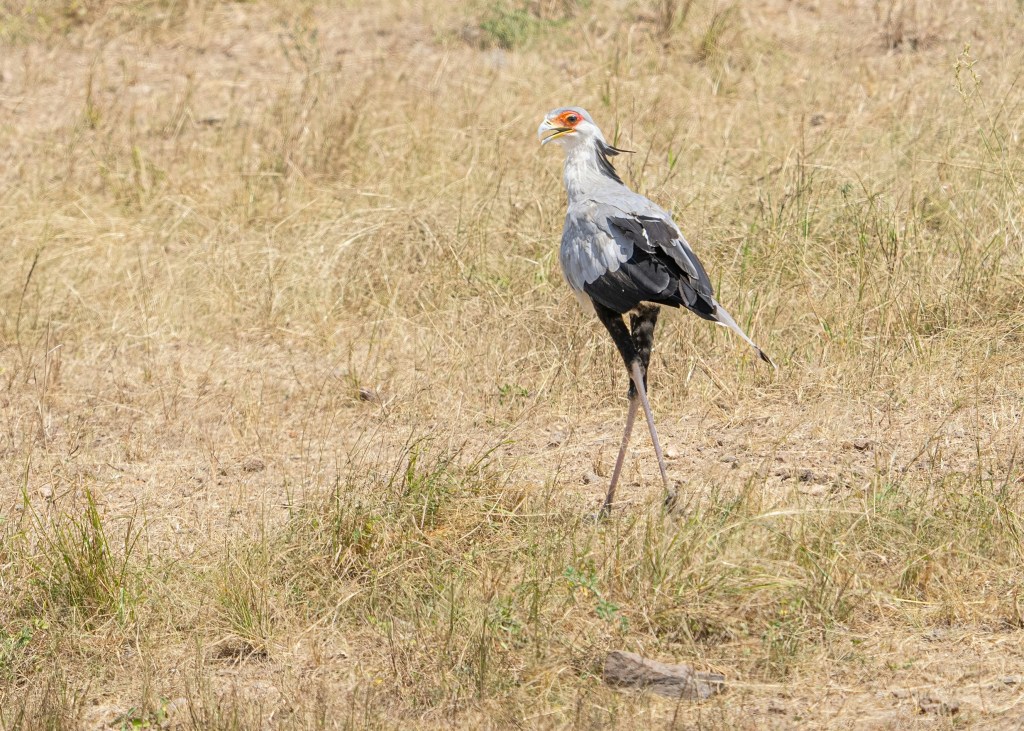
    Start here because nothing else makes the case quite as powerfully.The secretary bird stands over a metre tall on legs that belong on a crane, not a raptor. It does not hunt from the air. It walks. Every day it covers open grassland on foot, head down, moving with deliberate purpose through the Maasai Mara, Amboseli, Samburu, and Tsavo.

    When it finds a snake, it does not use its beak. It stomps. Researchers studying secretary bird strike mechanics recorded blows delivered at five times the bird’s own body weight in under 15 milliseconds fast enough and forceful enough to stun or kill a venomous snake before the snake can respond. The bird then repeats the strike until the prey stops moving.

    This is a raptor that kills by foot. On the grassland. In full view of any game drive vehicle that bothers to stop.Most do not stop.

    The secretary bird is not on the bucket list. It does not have five in its name. Guests see a large bird walking and move on.

    Do not be that guest.

    Where to spot it in Kenya: Open grassland across the Maasai Mara, Amboseli plains, Samburu’s open areas, and Tsavo East. Most active in the early morning when it begins its daily patrol.

    The Kori Bustard: The Heaviest Flying Bird in Kenya

    The kori bustard holds a record most people do not know exists. It is one of the heaviest birds capable of flight on the planet, with males weighing up to 19 kilograms. Despite this, it spends almost all of its time walking slowly through open savannah, feeding on insects, lizards, and the occasional small snake.

    The kori bustard is not a subtle bird. It is large, upright, and moves through the grass with a slow deliberate gait that makes it easy to track once you know what you are looking for. During the breeding season males perform elaborate display walks, puffing up their throat feathers and fanning their tail to an extraordinary size.

    Yet it consistently gets overlooked on game drives because it does not move quickly, does not make dramatic sounds, and does not appear in predator highlight reels.

    Where to spot it in Kenya: Maasai Mara, Amboseli, and Tsavo. Often seen in pairs or alone on open plains away from dense bush.

    The Somali Ostrich: Samburu’s Distinctive Giant

    Most visitors to Kenya will have seen the common ostrich. Fewer will know that Samburu National Reserve is home to a distinct species: the Somali ostrich, identifiable by its blue-grey neck rather than the pink-red neck of its southern cousin.

    The Somali ostrich is one of the Samburu Special Five. Five species endemic to Kenya’s northern frontier that you will not reliably find anywhere else in the country. It is larger than the common ostrich, equally fast on the ground at speeds of up to 70 kilometres per hour, and equally dismissive of the idea that birds should fly.

    On a game drive in Samburu, the Somali ostrich is impossible to miss if you are looking at the right level. At ground level.

    Where to spot it in Kenya: Samburu National Reserve and the wider northern frontier. Less common in southern Kenya parks.

    Helmeted Guineafowl

    No ground bird in Kenya is more commonly seen and more consistently underestimated. Helmeted Guineafowl travel in large, noisy flocks across virtually every ecosystem in the country. They are loud, chaotic, and relentlessly entertaining.

    What most visitors do not know is that guineafowl are ecologically important. They consume enormous quantities of ticks and insects, making them natural pest controllers across Kenya’s farmlands and game reserves alike. They are also a key prey species for servals, jackals, and large raptors.

    If you see a flock of guineafowl scatter suddenly and go silent, pay attention. Something is hunting nearby.

    The Crowned Lapwing: The Bird That Will Tell You Everything

    This one is not about drama or record breaking size. The crowned lapwing is a practical tool for any safari guest who wants to read the bush more accurately.

    A medium sized ground bird with a distinctive black and white crown and a red bill, the crowned lapwing is intensely territorial and almost permanently alarmed. When a predator moves through its territory, the lapwing screams. It does not stop screaming until the threat passes.

    Experienced guides listen for lapwing alarm calls the way birders listen for a dawn chorus. If a group of crowned lapwings suddenly becomes very loud and very agitated at the edge of a clearing, something is moving through the grass that does not want to be seen.

    Learn to recognise the call. It will find you wildlife that a visual scan alone never would.

    Where to spot it in Kenya: Ubiquitous across open and semi-open habitats throughout Kenya. Roadsides, airstrip edges, and short grass plains.

    Why ground birds matter on a safari

    Experienced guides read ground birds the same way they read tracks or broken grass. Guineafowl flushing suddenly, a Secretary Bird changing direction, a lapwing alarm call that does not stop. All of these are signals.

    Ground birds are also often the first thing guests can observe closely and clearly on a game drive, before the leopard is found or the lion lifts its head. Learning to read them properly changes the entire experience of being out in the bush. They reward patience and attention in a way that big game sightings sometimes do not.

    Practical Tips for Spotting Kenya’s Ground Birds on a Game Drive

    Shift your eyeline. The instinct on a game drive is to scan at horizon height. Ground birds live below that line. Consciously dropping your gaze to the grass level at regular intervals will double your sightings within a single drive.

    Ask your guide to stop for ground birds. Many guides will not stop unless they think a guest is interested. Most guests have not communicated any interest because ground birds are not on the standard request list. Telling your guide at the start of a drive that you want to see secretary birds and bustards changes the entire experience.

    Use midday productively. The hours between 11am and 3pm are traditionally quiet for mammal activity but ground birds remain active throughout. A midday drive focused on ground species is one of the most productive and underused safari strategies available.

    Do not dismiss what does not move dramatically. Ground birds are not ambush predators or sprinting prey. They move slowly, deliberately, and quietly. The temptation to keep driving is real. Resist it

    Watch the grassland edges. Ground birds use the transition zone between open grass and bush for hunting, nesting, and shelter. These edges are almost always more productive than the open plain or the dense bush alone.

    The Wider Point

    Kenya has over 1,100 bird species. The five mammals on every guest’s checklist are extraordinary. But they represent a fraction of what is actually happening in the ecosystem around every game drive vehicle.

    Ground birds are the entry point for a different way of experiencing Kenya’s wildlife. Not as a checklist. Not as a highlight reel. But as an ecosystem where everything is connected and almost everything is worth stopping for.

    The secretary bird is waiting in the grass right now. Most game drive vehicles are going to pass it.

    Do not be one of them.

    Follow Apex African Safaris on Instagram, Facebook, X, and Threads for daily Kenya wildlife content. Tag us in your Kenya bird sightings using #LetTheWildBeYourGuide
  • Cheetah vs Leopard: How to Tell Them Apart on a Kenya Safari

    Cheetah vs Leopard: How to Tell Them Apart on a Kenya Safari

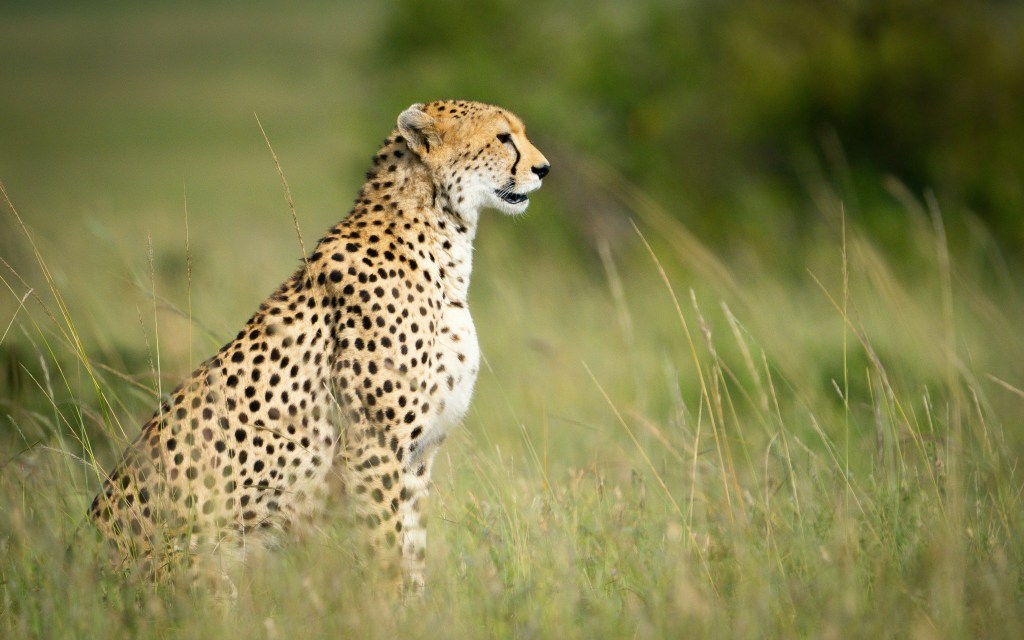
    Adult cheetah sitting upright in tall green savanna grass in profile view, solid black spots visible on pale golden coat, alert expression

    INTRODUCTION

    It happens on almost every first safari. The vehicle stops. The guide points into the grass. You raise your binoculars and see a spotted cat moving through the golden savannah. And then comes the question nobody wants to ask out loud.

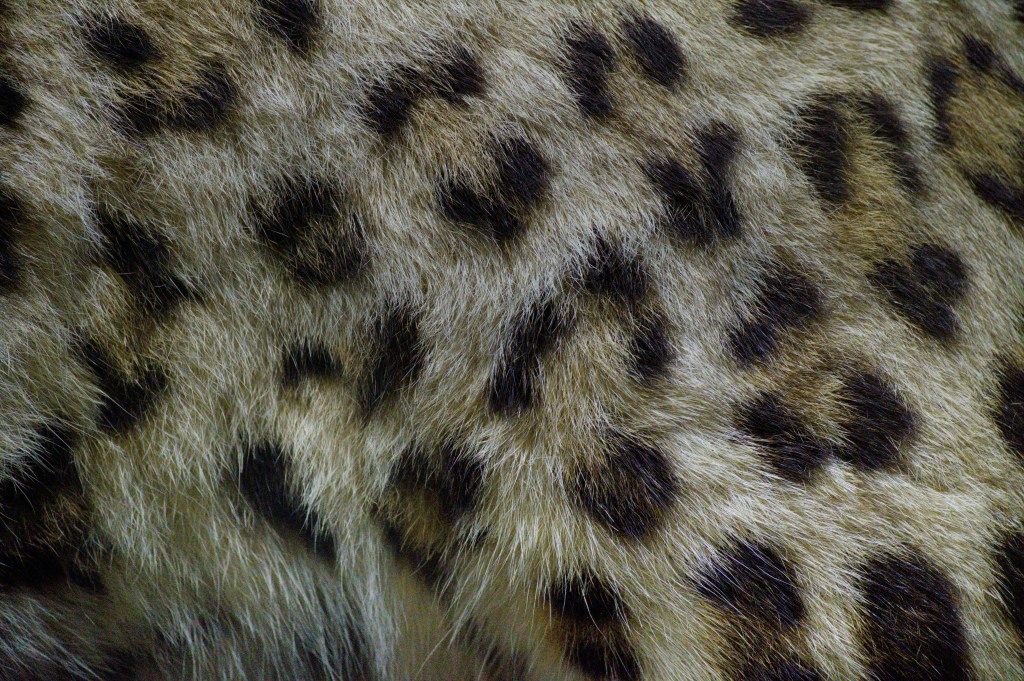
    The fur macro. Opens the identification conversation immediately by showing the spots up close before you even explain the difference.

    Is that a cheetah or a leopard?

    Do not feel embarrassed. Even experienced safari goers mix them up. Both are spotted. Both are big cats. Both live in Kenya. But once you know what to look for, you will never confuse them again. This guide covers everything – appearance, behaviour, hunting style, speed, habitat and exactly where to find each one in Kenya.

    THE QUICK ANSWER

    If you need one rule to take into the bush, here it is.

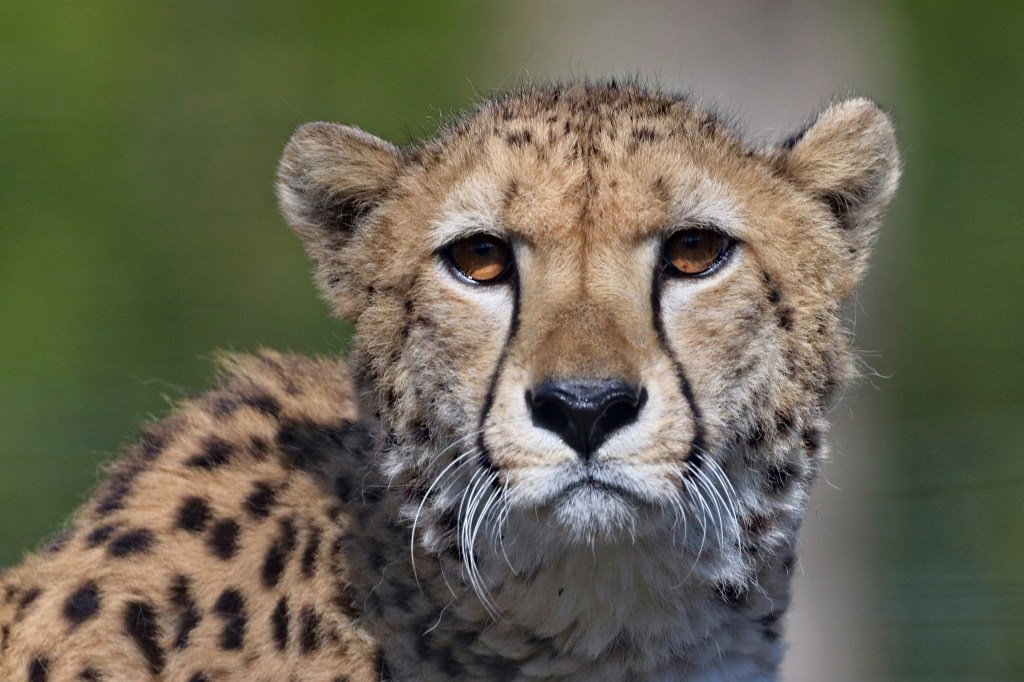
    Look for the tear marks.

    The cheetah has two distinctive black lines running from the inner corner of each eye down to the sides of the mouth. The leopard has none. That single detail is enough to tell them apart at a distance, even from a moving vehicle.

    Everything else follows from there.

    APPEARANCE: HOW TO TELL THEM APART VISUALLY

    The Face

    The cheetah’s tear marks are its most distinctive feature. These solid black lines serve a functional purpose, reducing sun glare during daytime hunts, much like the black lines athletes paint under their eyes. The leopard’s face is clean, with no such markings.

    The cheetah also has a smaller, more rounded head relative to its body size. The leopard has a large, broad head with a powerful jaw built for gripping and carrying heavy prey.

    The Coat

    Cheetah spots are simple solid black dots evenly distributed across a tawny yellow coat.

    Leopard spots are rosettes. Small clusters of spots arranged in a ring with a lighter or golden centre, like a flower pattern across the coat. Up close the difference is unmistakable. On a moving animal from a distance, the rosettes can look like solid spots, which is why the tear marks remain the most reliable identifier.

    The Build

    This is where the two animals could not be more different.

    The cheetah is built for pure speed. It is lean, lightweight and aerodynamically designed. Long slender legs. A deep narrow chest for oxygen intake. A flexible spine that compresses and extends like a spring at full sprint, adding distance to every stride. A long tail that acts as a rudder for steering at high speed. The cheetah looks like it was engineered in a wind tunnel.

    The leopard is built for power. It is heavier and more muscular with thick powerful shoulders, a broad chest and a stocky neck. It carries its weight low and forward, giving it the strength to climb trees and haul prey heavier than itself up a vertical trunk. Where the cheetah looks like a sprinter, the leopard looks like a weightlifter.

    Size

    Adult cheetahs weigh between 35 and 65 kilograms. Adult leopards weigh between 28 and 90 kilograms, with males significantly larger than females. Despite the overlapping weight range, a leopard almost always looks more substantial and powerful in the field.

    SPEED AND HUNTING STYLE

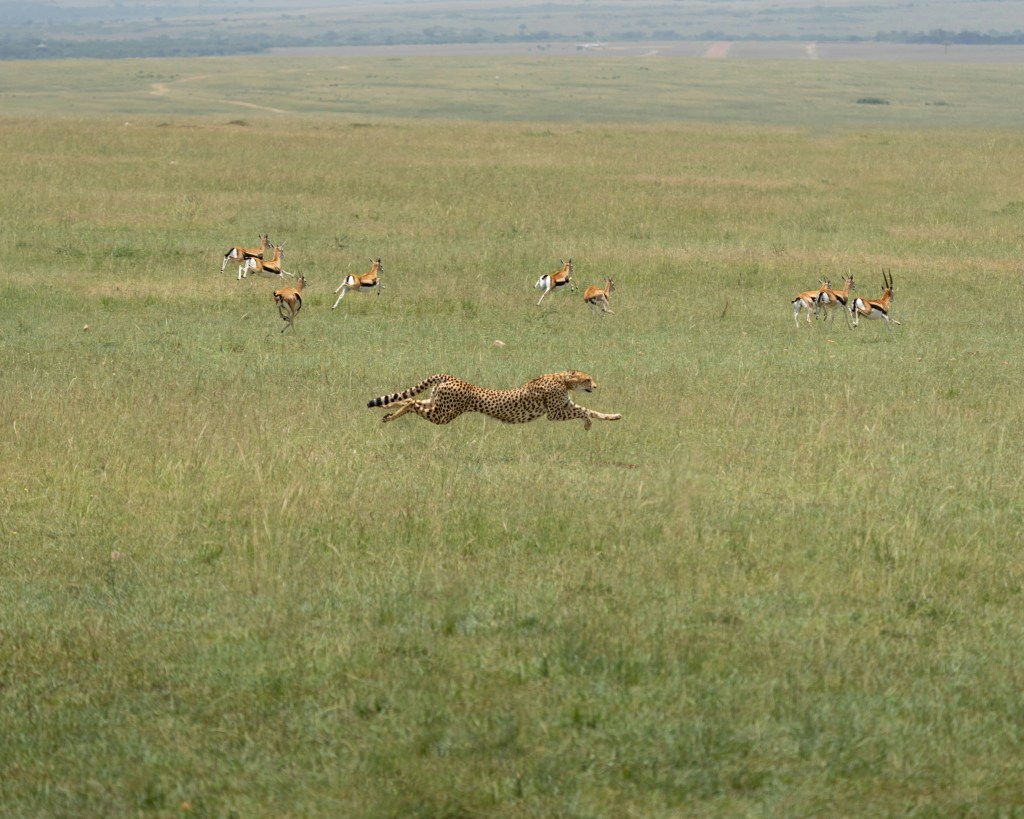
    The chase scene. This is your strongest action shot and it earns its place next to the speed facts.

    The Cheetah

    The cheetah is the fastest land animal on earth. Full stop.

    It can accelerate from 0 to 100 kilometres per hour in approximately three seconds and reach a top speed of around 120 kilometres per hour in short bursts. These sprints rarely last more than 20 to 30 seconds. The cheetah’s body generates enormous heat at full speed and it must rest and cool down after every chase, sometimes for up to 30 minutes.

    The cheetah hunts in daylight, typically in the early morning or late afternoon. It uses its exceptional eyesight to spot prey from a distance, then stalks close before launching a high speed chase. It trips its prey with a dewclaw and suffocates it with a bite to the throat.

    Because the cheetah is not built for confrontation it often loses its kill to lions, leopards, hyenas and even large birds. Speed is its only real weapon. Once the prey is caught, the cheetah is vulnerable.

    The Leopard

    The leopard is a completely different kind of hunter.

    Where the cheetah uses speed, the leopard uses stealth. It is a patient, methodical predator that hunts mostly at night, using darkness and cover to get close to prey before striking. It does not chase over long distances. It closes the gap silently and kills with a single precise bite to the back of the skull or throat.

    The leopard’s strength is extraordinary. It routinely hauls prey twice its own body weight up into a tree, sometimes six metres or more off the ground. This behaviour protects the kill from scavengers like lions and hyenas that cannot climb. A kill hauled into a tree can last a leopard several days.

    Unlike the cheetah, the leopard rarely loses a kill. It is strong enough to defend what it catches and smart enough to put it somewhere others cannot reach.

    BEHAVIOUR AND PERSONALITY

    The intense cub close-up showing tear marks clearly. Works perfectly next to any text explaining the tear mark identification feature.

    Cheetah

    Cheetahs are the most social of the big cats after lions. Male cheetahs often live in small coalitions, usually brothers from the same litter. Female cheetahs are largely solitary except when raising cubs.

    Cheetahs are active during the day and relatively easy to observe on open plains. They tend to use raised ground like termite mounds or fallen logs as lookout points to scan for prey. They are also the least aggressive of Kenya’s big cats toward humans and safari vehicles, often walking calmly past game drive vehicles with apparent indifference.

    Leopard

    The leopard is the ultimate loner. Almost entirely solitary, secretive and largely nocturnal. It goes to extraordinary lengths to avoid being seen, which is why it is considered the hardest of the Big Five to spot despite being relatively common across its range.

    During the day leopards rest in trees, dense bush or rocky outcrops. They are most active between dusk and dawn. When a leopard is spotted in daylight it is usually because an experienced guide knows exactly which tree to look in.

    The leopard is also the most adaptable big cat on earth. It survives in forests, mountains, semi-arid scrub, open savannah and even on the outskirts of cities. No other big cat has a range as wide or as varied.

    WHERE TO FIND THEM IN KENYA

    Cheetah

    Cheetahs need open space to hunt. They are almost exclusively found in open grassland and savannah where they can use their speed effectively.

    The best places to see cheetahs in Kenya are the Maasai Mara, particularly the open plains of the Mara Triangle, and Amboseli National Park. The Mara is home to some of Africa’s most studied cheetah populations and sightings are relatively reliable, especially during the dry season when grass is short and visibility is good.

    Ol Pejeta Conservancy in Laikipia also has a strong cheetah population in a more intimate setting than the Mara.

    Leopard

    Leopards are found across a much wider range in Kenya but are harder to see because of their nocturnal and secretive nature.

    The Maasai Mara has a healthy leopard population. The area around the Mara River and the fig tree forest near Governors Camp are particularly productive for leopard sightings. Laikipia Plateau, Samburu National Reserve and the forests around Mount Kenya also hold significant leopard populations.

    The best time to spot a leopard is very early morning, just after sunrise, when they may still be moving or feeding in a tree before settling in for the day. A good guide who knows the territory will know which trees to check.

    CONSERVATION STATUS

    Cheetah

    The cheetah is classified as Vulnerable on the IUCN Red List. There are estimated to be fewer than 7,000 cheetahs remaining in the wild globally. In Kenya cheetah populations face pressure from habitat loss, human-wildlife conflict and the illegal pet trade. Cheetah cubs are captured and sold as exotic pets across the Middle East, devastating wild populations.

    Leopard

    The leopard is classified as Vulnerable globally but individual subspecies face much more serious threats. In Kenya leopard populations are relatively stable compared to much of Africa but habitat loss and retaliatory killing by farmers protecting livestock remain significant concerns.

    QUICK REFERENCE GUIDE

    Tear marks: Cheetah yes, Leopard no

    Spots: Cheetah solid dots, Leopard rosettes

    Build: Cheetah lean and light, Leopard heavy and muscular

    Hunting time: Cheetah daytime, Leopard nighttime

    Hunting method: Cheetah speed chase, Leopard stealth ambush

    Top speed: Cheetah 120km/h, Leopard 60km/h

    Tree climbing: Cheetah rarely, Leopard frequently

    Social: Cheetah sometimes in coalitions, Leopard solitary

    Best Kenya location: Cheetah Maasai Mara and Amboseli, Leopard Maasai Mara and Laikipia

    CONCLUSION

    The cheetah and the leopard are both extraordinary animals. Both deserve your attention and your respect on safari. But they are fundamentally different creatures living fundamentally different lives.

    The cheetah is speed, daylight and open grass. The leopard is power, darkness and secrets.

    Kenya has both. If you are lucky and patient enough, you will see both on the same trip.

    Start with the tear marks. Everything else follows.

    Follow Apex African Safaris on Instagram, TikTok and Threads at safari2apex for daily Kenya wildlife, culture and safari content.

  • Your First Kenya Safari in Maasai Mara: What No One Tells You

    Your First Kenya Safari in Maasai Mara: What No One Tells You

    You watch videos of lions and sunsets on the savannah. You land in Kenya unprepared for the real experience.

    A Maasai Mara safari gives you more than animals. It tests you with discomfort, silence, patience, and awe. Do it right and it changes how you travel forever.

    The 6AM Game Drive That Defines Your Kenya Safari

    Safari 4×4 vehicle on early morning game drive in Maasai mara, Kenya

    Your Kenya safari starts at 6:00 AM in the dark. It challenges you immediately.

    At 5:30 AM you sit wrapped in blankets and question the cold. The Maasai Mara sits at an altitude of 1,480 to 2,280 metres above sea level . Dawn temperatures drop to 10-13°C and wind chill in open 4×4 vehicles makes it feel closer to 5°C. This shocks most first-time Kenya safari travelers. Daytime reaches 25-28°C while evenings cool again. Pack layers or you shiver through peak wildlife hours.

    Why Early Morning Game Drives Deliver the Best Kenya Safari Sightings

    Guides insist on dawn drives because predators stay active in the cool hours. Lions, cheetahs, and hyenas hunt when conditions favor them. Mid-morning heat pushes animals into shade and slows the action.

    At sunrise you see lion prides finish hunts, hyenas patrol, elephants move through mist, and the savannah wakes up with layered sounds. Skip these early game drives and you miss peak activity plus the powerful feeling of the African wild at first light.

    Prepare for the Cold on Your Maasai Mara Safari

    Kenya safari packing decides your comfort. Bring a warm fleece, windproof jacket, and gloves for morning drives. The temperature swings hit hard in open vehicles.

    Handle the cold correctly and you stay focused on the wildlife instead of the discomfort.

    Put Your Phone Down During Game Drives

    Record every lion or elephant and you capture footage, not memories. The strongest Maasai Mara safari moments hit when you watch in silence.

    Keep your phone away for the first 10 minutes of any sighting. You notice subtle behaviors, building tension, and natural sounds most people miss. Safari rewards presence over content creation. Absorb the experience first.

    Your Maasai Mara Safari Guide Makes or Breaks the Trip

    Choose your operator and guide with care. Top guides track animals from long distances, predict movements, and position vehicles for clear views.

    They know the 1,510 km² reserve that holds the Big Five and over 470 species of birds . Their skill delivers the sightings that define your Kenya safari. Tip your guide well. Their knowledge creates the memories you take home.

    Maasai Mara Wildlife Facts Every First-Timer Needs

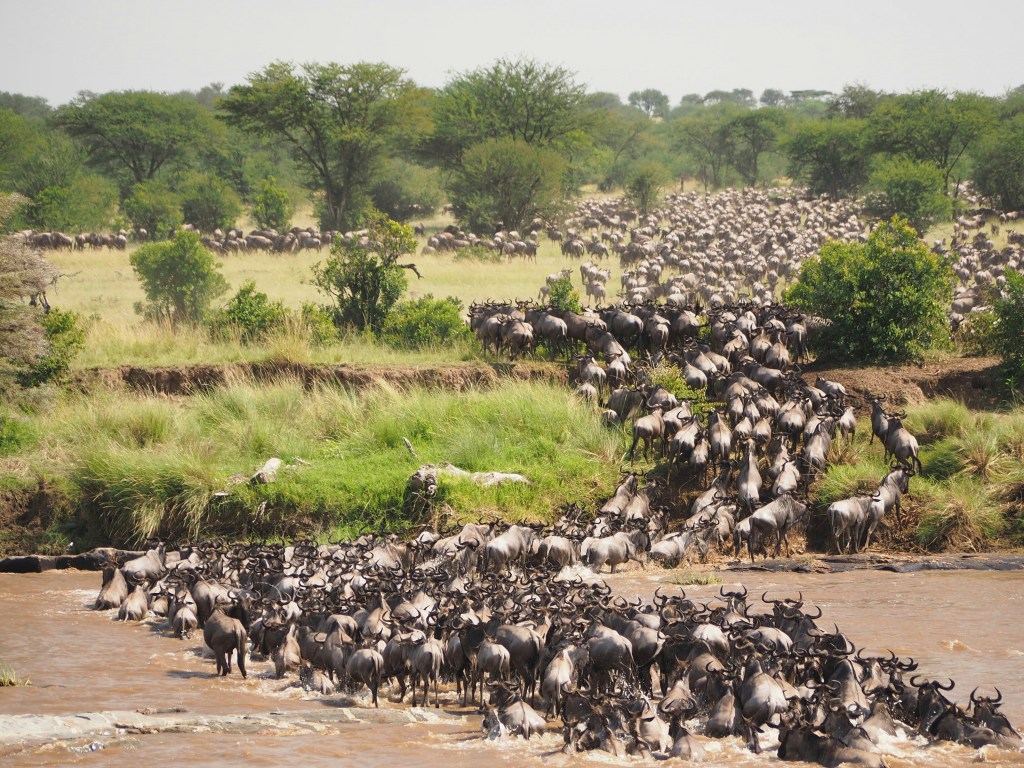
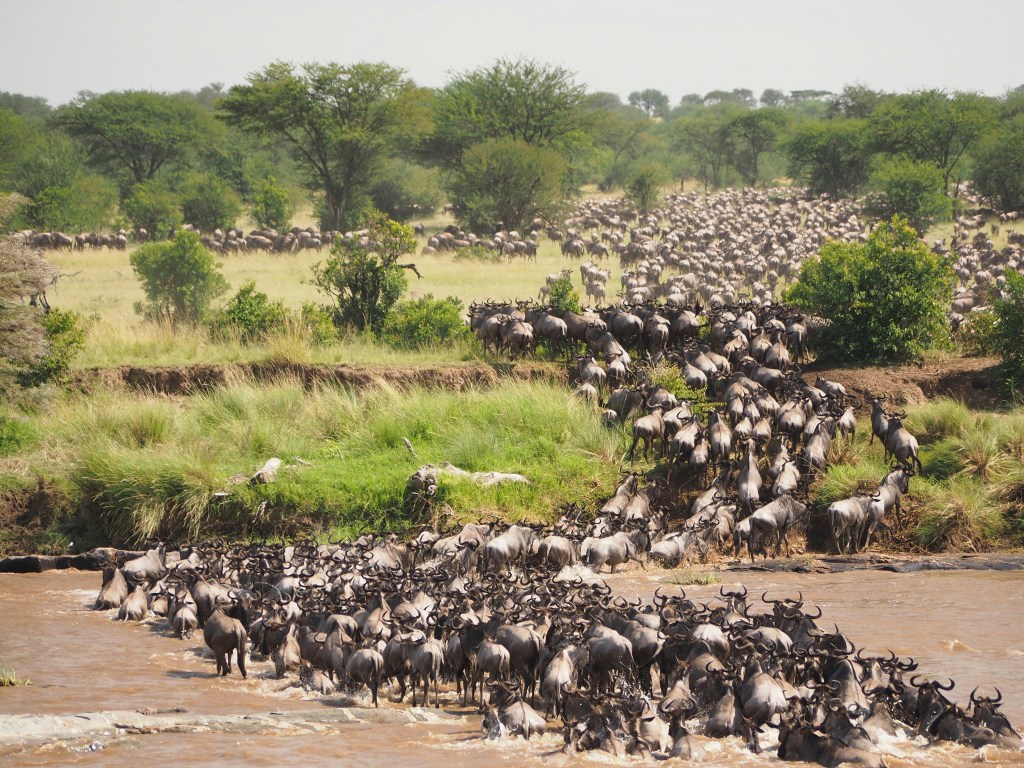
    Wildebeest crossing the mara river during the great migration, Masai Mara,Kenya

    The Maasai Mara supports an estimated 850 to 900 lions in the reserve and surrounding conservancies , making it one of the highest-density lion populations anywhere in Africa. The reserve forms part of the greater Serengeti-Mara ecosystem, and each year over 1.2 million wildebeest and 300,000 zebra move through during the Great Migration from July to October, with dramatic Mara River crossings.

    You do not need migration season for strong wildlife viewing. The reserve delivers consistent sightings all year. Different seasons give you different advantages.

    Avoid This Common First-Time Kenya Safari Mistake

    Many travelers chase a checklist. Lion. Elephant. Cheetah. Slow down instead. Spend extra time with one pride. Watch real behavior unfold.

    Stay present longer. This approach turns good sightings into unforgettable experiences.

    Best Time for Your Kenya Safari in Maasai Mara

    June to October offers dry conditions, easier animal spotting, and migration highlights with clear skies.

    November to May brings fewer crowds, green landscapes, and excellent photography light.

    Pick dates based on your priorities for crowds, scenery, or specific wildlife events. Every period delivers a strong Maasai Mara safari.

    How to Reach the Maasai Mara

    Drive 270 to 280 km from Nairobi in 5 to 6 hours. Or fly into reserve airstrips for faster access.

    Once inside, you explore by 4×4. Limited walking safaris with armed guides add another layer. This isolation places you inside nature instead of just visiting it.

    Why a Kenya Safari Changes Every Future Trip

    After Maasai Mara you find beaches too passive and cities too loud. Normal vacations feel shallow.

    You remember locking eyes with a lion, watching untouched sunrises, and feeling small in the best way. The experience raises your travel standards permanently.

    What Surprises Most First-Time Kenya Safari Travelers

    Emotions hit hardest. You expect excitement. You receive stillness, humility, and overwhelm.

    The vast landscape and raw wildlife make you feel connected and small at the same time.

    Book Your Kenya Safari and Do It Right

    You will feel tired. You will feel cold. You will hesitate at early wake-ups.

    Go anyway. The silence, sunrise, and wild deliver moments that stay with you for years.

    #LetTheWildBeYourGuide

    Your Turn

    What surprised you most during your Kenya safari in Maasai Mara? Share below. Your experience helps first-timers prepare better. Contact Us

Design a site like this with WordPress.com
Get started